H-1B $100,000 entry fee extended to 2027, with new layoff test for sponsors
By the administration's own count, the largest IT staffing and outsourcing firms cut H-1B registrations 92% in the fee's first year. A companion order ties visa decisions to employers' recent and planned layoffs.
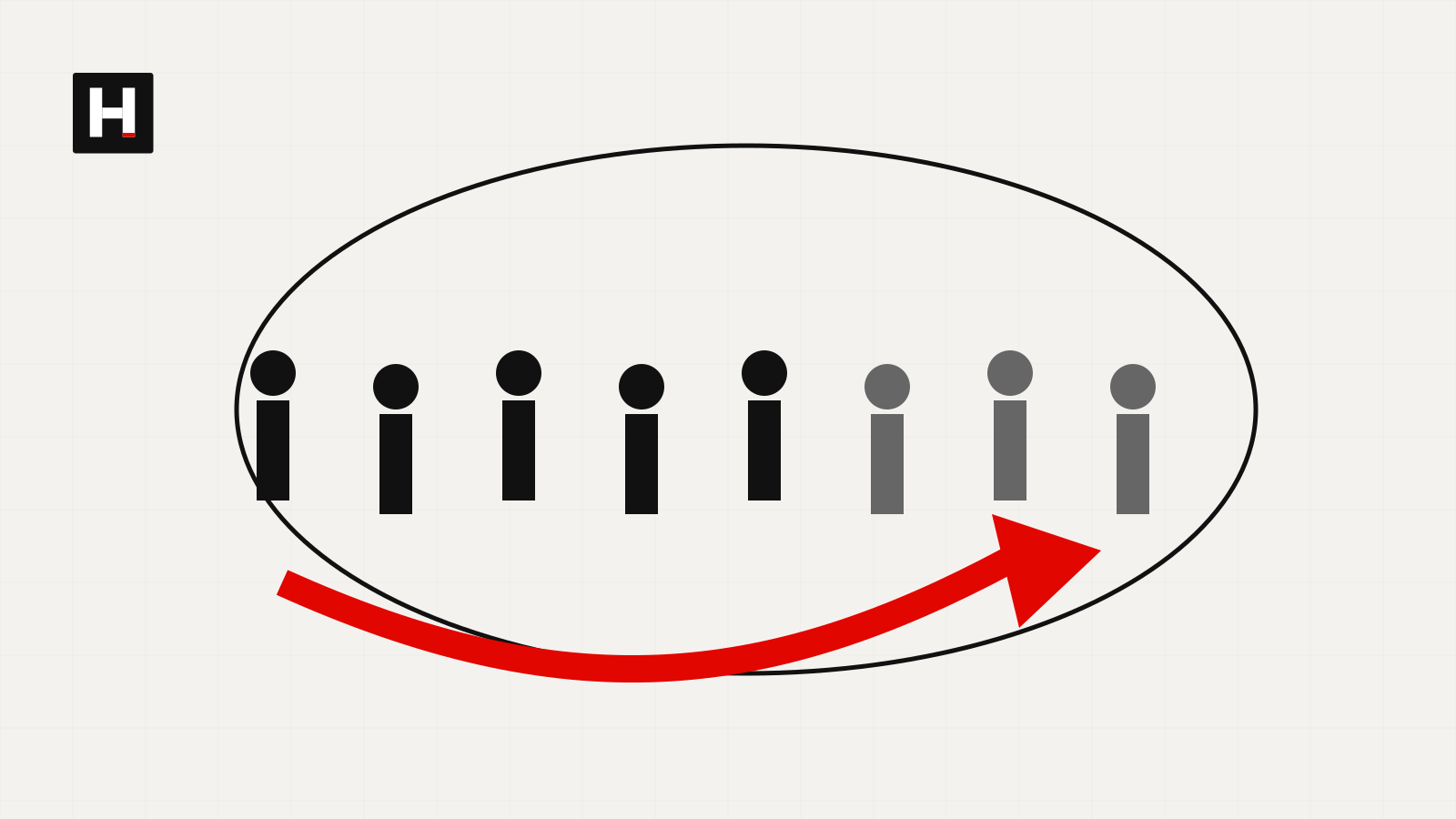
Bringing an H-1B worker into the United States from abroad will keep costing employers $100,000 through September 2027, while a companion order tells agencies to weigh a sponsor's recent and planned layoffs in H-1B decisions.
President Trump signed Proclamation 11069 on September 18, extending the entry restriction first imposed in September 2025 until September 21, 2027. Since the original took effect, the payment has been made for "over 700 petitions," according to the proclamation, published in the Federal Register on September 23.
Over the same stretch, the largest IT staffing and outsourcing firms cut their combined H-1B registrations from 24,946 to 2,055, a 92 percent drop. Consular processing requests, the channel used to bring workers into the country, fell nearly 97 percent between the FY2025 and FY2027 cap seasons, the proclamation says.
The proclamation leaves little doubt about its intended target. It names IT staffing and outsourcing firms as having supplied "a large volume of entry-level temporary H-1B workers, generally at a much lower salary" than full-time workers, and says some later moved IT roles overseas. The executive order adds that the top six H-1B users running an outsourcing model accounted for more than 25,000 cap registrations in FY2026. It puts the wage gap between H-1B holders and comparable U.S.-born workers at $9,000, rising to as much as $20,000 in H-1B-reliant industries, by the administration's estimate.
The fee is the renewal. The new constraint comes from Executive Order 14431, signed the same day. It directs the secretaries of State, Labor and Homeland Security to take into account, in any labor condition application, petition, visa or entry decision, whether the employer sponsor "directly or indirectly engaged in layoffs within the previous year or plans future layoffs that negatively affect the employment of similarly situated United States workers." That test is written to apply to H-1B adjudications generally, not only to workers arriving from abroad.
Within 30 days of the order, the Labor Department's Wage and Hour Division is to begin reviewing previously submitted labor condition applications to decide whether further action against sponsoring employers is warranted. The order also pulls the Commerce and Education departments and the Small Business Administration into H-1B processing as suppliers of wage, employment and academic data.
The fee's reach is narrower than the layoff test. Under the proclamation, it applies to workers who enter or attempt to enter after September 21, 2026, and who must seek admission to act on an approved petition, whether through consular notification, a port of entry, pre-flight inspection or pre-clearance. The instruction to DHS to restrict decisions on unpaid petitions covers workers "currently outside the United States." Employers must obtain and keep proof of payment before filing, and the State Department is to approve only visa applications where the payment has been made.
The one release valve is discretionary. The Homeland Security secretary may exempt an individual worker, all of a company's workers or all workers in an industry if the secretary determines the hiring is in the national interest and does not threaten the security or welfare of the United States.
The fee has not worked alone. A DHS final rule published December 29, 2025, replaced random selection with a weighted process favoring higher-paid, higher-skilled registrations, and it governed the FY2027 cap season. Registrants holding at least a U.S. master's degree rose from 45.1 percent of the total for FY2026 to 66.1 percent for FY2027. Offers at the two highest wage levels took about 46.3 percent of selections, against 17.8 percent at the lowest, the proclamation says. A White House fact sheet adds that registrations fell by almost 40 percent in the first wage-weighted lottery. The proclamation credits the fee and the weighted lottery jointly, calling it "reasonable to conclude" they deterred low-wage recruitment.
The labor-market measures the proclamation offers as justification for continuing have barely moved. Unemployment among recent college graduates stood at 5.7 percent in June 2026, against 5.8 percent in September 2025. Underemployment for the same group rose from 41.8 percent to 42 percent. The administration presents both as evidence that the conditions behind the original restriction persist.
More rules are pending. The Labor Department's proposed prevailing-wage rule, published March 27, 2026, is not final, and the proclamation says the correction "will take a significant amount of time." The administration also says it is exploring further H-1B reform and cost recovery for immigration program administration.
The next decision point is fixed in the text. No later than 30 days after the next H-1B lottery, the secretaries of State, Labor and Homeland Security and the attorney general must recommend to the President whether the restriction should be extended again.
Sources (11)
Related coverage
The Morning Brief is coming soon
The HEADCOUNT
Morning Brief.
Get on the list for HEADCOUNT’s weekday briefing on the business of work.
- Weekday mornings, built from published HEADCOUNT reporting
- Evidence-backed — every item traces to sourced coverage
- The Signal: what the day's developments indicate for hiring