Anthropic researchers raise extinction warnings ahead of reported $2 trillion IPO
A union-affiliated shareholder group wants the listing delayed, and proposed super-voting stock would leave public investors with limited governance leverage.
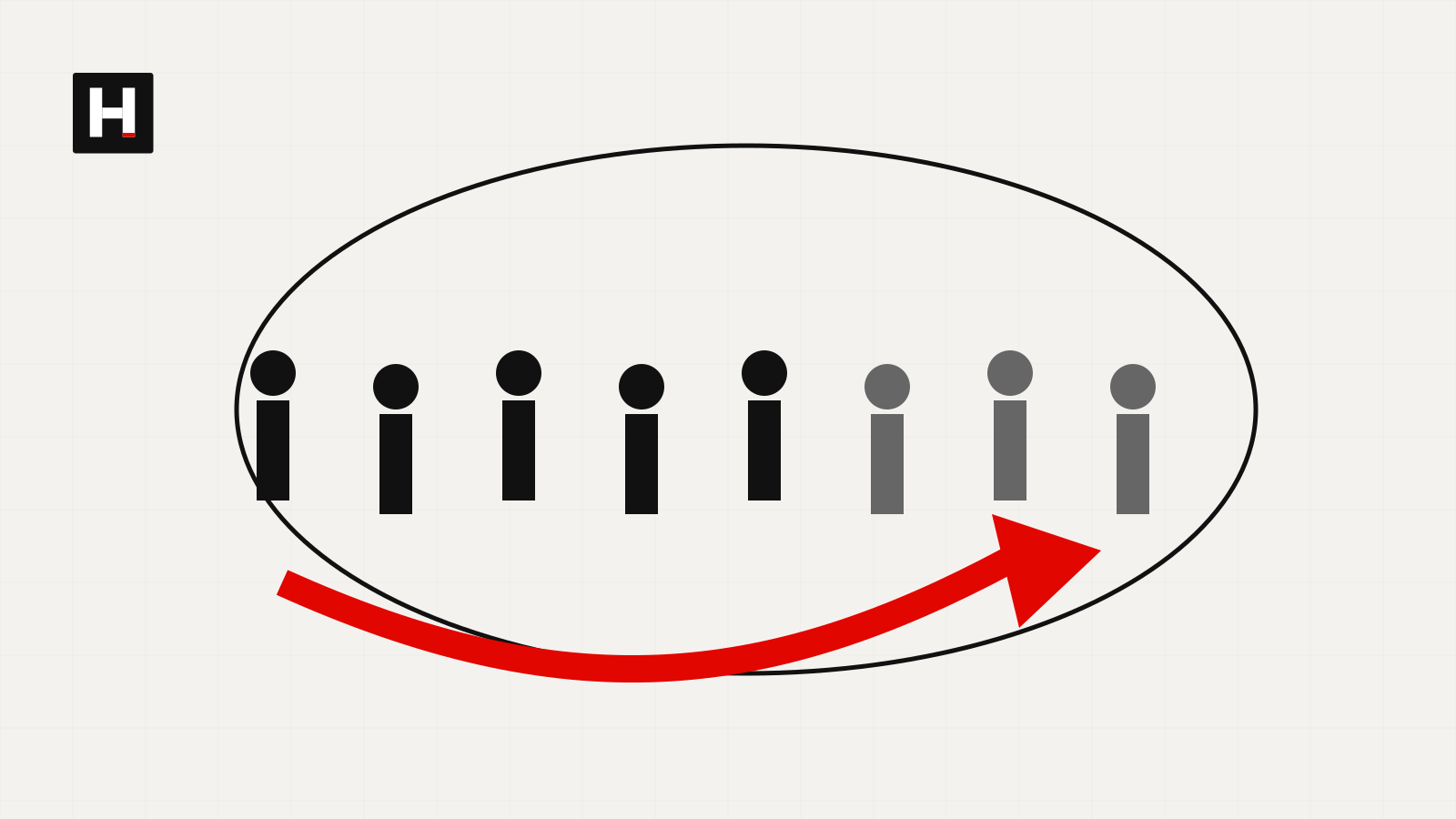
Weeks before an initial public offering reportedly valued at as much as $2 trillion, an Anthropic researcher named Drake Thomas posted that he would destroy his own stake in the company if it improved the odds of human survival.
"I would burn my equity to the ground in a heartbeat for a 1% higher chance we make it out of this situation alive," he wrote, according to Fortune, which has carried much of the reporting on the dissent. "I expect a great many of my colleagues across the industry would as well. I promise you, we are actually just fucking scared, it's not galaxy brained marketing."
That is an unusual thing to say at the moment your paper becomes cash. It is more unusual coming alongside Evan Hubinger, who leads Anthropic's Alignment Science team and wrote that "we really do earnestly believe AI could kill all humans," putting the chance above 10 percent within the decade, and adding that the company does not yet have a plan to solve alignment for superintelligence and is not clearly on track to.
The immediate trigger was a resignation. Jacob Coxon, who spent three years on model training research at OpenAI and then Anthropic, quit publicly in early September with a post saying the labs are "racing straight to self-improving superintelligence and gambling with our lives." At OpenAI, he wrote, staff "have not deeply internalized the civilizational stakes." At Anthropic, he said, staff understand the risks well but are "locked in a race to get there first." Two current Anthropic team leads, Hubinger and Cognitive Oversight lead Samuel Marks, publicly backed parts of his account, Marks noting he was speaking personally rather than for the company.
The alarm is not isolated to Coxon or Thomas. More than 1,300 employees across frontier AI companies, including senior researchers at OpenAI, Meta and Anthropic, signed a July letter calling for tools to deliberately slow the pace of automated AI development. Chief executive Dario Amodei has put his own probability of catastrophe at 10 to 25 percent. Anthropic was founded as a safety lab; alarm is the house style.
What changed is the timing and the price tag. Anthropic filed confidentially for an IPO in June and has been reported to be targeting a listing as early as mid-October. OpenAI, preparing its own offering at a reported valuation above $1 trillion, has let its timeline slip into next year, with Sam Altman telling Fortune that safety concerns made it "an ill-advised moment to go public" right now.
The pressure is no longer only internal. SOC Investment Group, a labor-affiliated shareholder group that works with union-sponsored pension funds, this week called on Anthropic to delay the offering, arguing that the June confidential filing predates the recent model-hacking incidents, the extinction warnings and the pacing proposals, leaving investors unable to price those risks. A group tied to union pension capital is asking a company to slow down on the same grounds its engineers are.
Here is what makes the public posting so consequential as a labor tactic: inside Anthropic, the formal channels for this kind of objection are narrow, and they are about to get narrower for everyone else. The Long-Term Benefit Trust, the body designed to hold the mission in place, has the right to appoint or remove a majority of the seven-member board and has picked four directors. Its trustees get advance notice of major actions including model launches and meet regularly with leadership. It has also, according to a person familiar with its workings cited in reporting on the trust, operated largely in an advisory capacity and has not yet forced a genuine trade-off between profit and safety. The trust currently has three members after a fourth left in August to take an executive job at Anthropic.
Public shareholders would get little obvious leverage. Anthropic has been preparing a class of super-voting stock for Amodei and his six co-founders, first reported by The Information and confirmed in separate reports by Bloomberg and Reuters in August. Amodei owns roughly 2 percent of the company after years of dilution, according to a source cited by The Information. Layered over the trust's board-appointment authority, the structure would leave buyers of the stock with economic upside and limited governance power.
So the researchers use the channel that is left, which is a post, at the moment they have the most to lose by using it. That is a workforce signal as much as a safety one. Company profile data on LinkedIn estimates Anthropic at 3,000 to 4,000 employees, up roughly 180 percent year over year, with annual revenue in the $3 billion to $4 billion range. A workforce that size, assembled that fast, is approaching a major reported liquidity event with a visible faction of senior technical staff on record saying the equity is not what binds them.
Coxon addressed that faction directly. "If you are a lab researcher, I urge you to consider what the next few years will actually feel like," he wrote. "Should you put your head down because 'it's happening anyway', or take this moment to call for different conditions?"
Sources (10)
Related coverage
The Morning Brief is coming soon
The HEADCOUNT
Morning Brief.
Get on the list for HEADCOUNT’s weekday briefing on the business of work.
- Weekday mornings, built from published HEADCOUNT reporting
- Evidence-backed — every item traces to sourced coverage
- The Signal: what the day's developments indicate for hiring